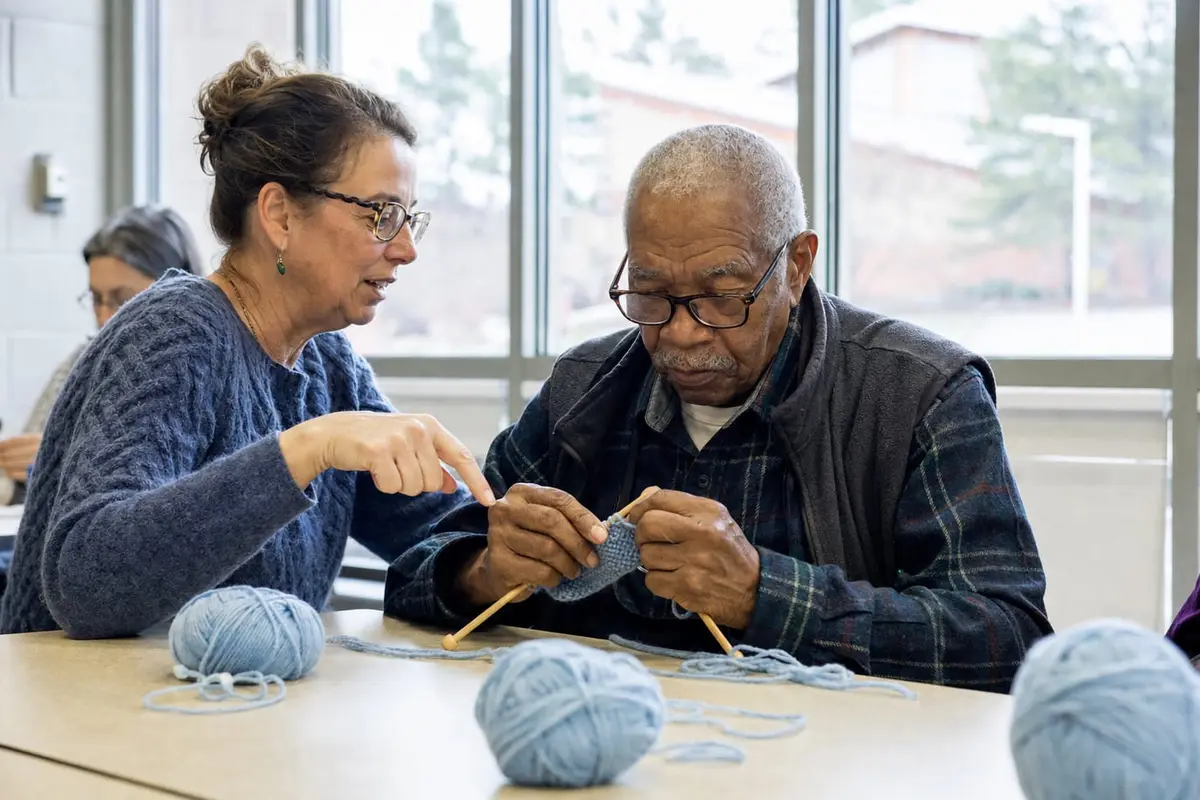
Following Lion Brand's beginner guide (updated 2023), start knitting with a smooth, light worsted (4) yarn and US 7 to 9 (4.5 to 5.5 mm) needles. Cast on, then learn the knit stitch: knitting every row makes garter stitch, which KnitPro (2025) calls the best first fabric. Add the purl stitch, bind off and knit a scarf.
Garter stitch — Garter stitch is the knitted fabric made by working the knit stitch on every row when knitting flat; according to KnitPro (2025), it lies flat without blocking and looks the same on both sides, which makes it the usual first fabric for beginners.
Some links on this page are affiliate links: if you buy through them, we may earn a commission at no extra cost to you. It never changes our rankings. As an Amazon Associate I earn from qualifying purchases. Affiliate policy
Knitting needs only two needles and a ball of yarn, and its first fabric, garter stitch, uses a single stitch. This guide takes you from choosing supplies to finishing a first project, in the order you will need each skill. We explain the techniques and point to free patterns by their designers.
Quick reference
| Topic | Knitting | Crochet equivalent |
|---|---|---|
| Tool for Medium (4) worsted | US 7 to 9 needles (4.5 to 5.5 mm), e.g. a US 8 (5 mm) pair such as Clover Takumi bamboo | 5.5 to 6.5 mm hook (I-9 to K-10½) |
| Gauge for Medium (4) | 16 to 20 stitches per 4 in in stockinette | 11 to 14 single crochet (UK double crochet) per 4 in |
| Super Bulky (6) yarn, e.g. Lion Brand Wool-Ease Thick & Quick | US 11 to 17 (8 to 12.75 mm) | 9 to 15 mm (M-13 to Q) hook |
| Standard abbreviations | k knit, p purl, CO cast on, BO bind off, St st stockinette | ch, sc, hdc, dc |
| US vs Canadian terms | bind off = cast off; gauge = tension | single crochet = UK double crochet |
| Fixing a dropped stitch | a crochet hook one size smaller than the needle (KnitPro, 2023) | not needed: one live loop |
Sizes and terms from the Craft Yarn Council’s 2018 Standards & Guidelines unless noted.
At a glance
| Step | What to do | Detail |
|---|---|---|
| Yarn | smooth, light-colored Medium (4) worsted | avoid black, navy and fuzzy yarns (Lion Brand) |
| Needles | US 7 to 9 (4.5 to 5.5 mm), straight, bamboo or wood | label gives the exact size; US 8 (5 mm) is a common first pair |
| Gauge for worsted | 16 to 20 stitches per 4 inches in stockinette | Craft Yarn Council (2018) |
| First skill | cast on (CO) | long-tail or knitted cast-on |
| First stitch | knit (k) | every row = garter stitch |
| Second stitch | purl (p) | knit one row, purl one row = stockinette (St st) |
| Finish | bind off (BO), weave in ends | yarn needle |
| First project | dishcloth or scarf in garter stitch | flat, no shaping |
What to buy
Lion Brand’s beginner guide keeps it simple: a worsted weight yarn in a light or bright color, smooth rather than fuzzy, needles in the size the label suggests, usually US 7 to 9 (4.5 to 5.5 mm), scissors and a yarn needle. Needles come in plastic, metal or wood; it is a matter of preference, but many beginners find bamboo and wood less slippery, so stitches stay on the needle. A pair of US 8 (5 mm) straight needles about 9 to 10 inches long is a common first pair. Our comparison of the best knitting needles for beginners and of beginner knitting kits list specific options.
Step 1: Cast on
Casting on puts the first row of loops on the needle. Two methods suit beginners: the knitted cast-on, which uses the same movement as the knit stitch, and the long-tail cast-on, a stretchy all-purpose edge. Our tutorial on how to cast on compares them. For a practice square, cast on 20 stitches.
Step 2: The knit stitch
Hold the needle with the stitches in your left hand and the empty needle in your right (reverse if you are left-handed).
- Insert the right needle into the front of the first stitch, from left to right, behind the left needle.
- Wrap the yarn around the right needle counterclockwise.
- Pull the wrapped loop through the stitch with the right needle.
- Slide the old stitch off the left needle. One knit stitch is done.
Repeat to the end of the row, then swap the needles between your hands and start again. Knitting every row like this makes garter stitch, which KnitPro’s 2025 comparison calls the winner for absolute newcomers: it lies flat without blocking and looks the same on both sides.
Step 3: The purl stitch
The purl stitch is the reverse of the knit stitch: insert the right needle into the front of the stitch from right to left, with the yarn in front, wrap, pull through and slide off. Alternating a row of knit and a row of purl makes stockinette stitch, the smooth fabric of V shapes most people picture as knitting. KnitPro notes that stockinette edges roll inward, which is why patterns often add a garter or ribbed border.
Step 4: Bind off
To finish, knit two stitches, then lift the first one over the second and off the needle; knit one more stitch and repeat until one stitch remains. Cut the yarn, pull the tail through the last loop and weave in the ends with a yarn needle.
Reading a knitting pattern
Davina Choy of Sheep and Stitch explains the basics: patterns open with materials and gauge, most include a glossary of abbreviations, asterisks mark a section to repeat, and RS and WS mean right side and wrong side. The Craft Yarn Council’s standard abbreviations include k (knit), p (purl), CO (cast on), BO (bind off), St st (stockinette stitch), k2tog (knit two together, a decrease) and kfb (knit front and back, an increase). Her advice: start with small, simple projects and keep a list of abbreviations handy.
Common beginner mistakes
- Dropped stitches. KnitPro defines a dropped stitch as a loop that came off the needle without being worked, leaving a ladder. Pick it up with a crochet hook one size smaller than your needle, one bar at a time.
- Extra stitches. Wrapping the yarn over the needle by accident, or knitting into the bar between stitches, adds stitches. Count every few rows.
- Twisted stitches. Inserting the needle into the back of the stitch twists it; keep to the front leg.
- Tight knitting. If stitches are hard to move, loosen your grip, or go up one needle size.
Your first project
A garter stitch dishcloth or scarf is the classic first project: a rectangle, one stitch, no shaping. Free options from designers:
| Pattern | Designer | Level stated | Yarn | Needles |
|---|---|---|---|---|
| Simple Garter Stitch Dishcloth | ChristaCoDesign | Beginner | Medium (4) worsted cotton | US 7 (4.5 mm) |
| Oversized Garter Stitch Dishcloth | Brome Fields | Advanced Beginner | worsted cotton, 110 to 120 yd | US 6 (4 mm) |
| Wheat scarf | Tin Can Knits | perfect for beginners, per the designers | worsted, 400 yd | US 8 (5 mm) |
| Simple Stockinette Hat | All About Ami | perfect for beginners | Super Bulky (6) | 9 mm straights |
Tin Can Knits wrote that Wheat and its companion blanket Malt are perfect for beginners, using an easy combination of stockinette, garter and ribbing on US 8 (5 mm) needles.
Holding the needles and the yarn
There are two common ways to hold the working yarn. In the English style, sometimes called throwing, the yarn is held in the right hand and wrapped around the needle with that hand. In the continental style, sometimes called picking, the yarn is held in the left hand and the right needle catches it. Crocheters often find continental natural, because they already tension the yarn with the left hand. Neither is more correct; choose one and keep it while you learn, because switching changes your tension.
Counting rows and stitches
In garter stitch, each ridge on the fabric equals two rows, which makes counting easy: count the ridges and double. In stockinette, count the V shapes in a column on the knit side. Count your stitches at the end of each row for the first few projects; an extra or missing stitch is easiest to fix right away.
Joining a new ball and finishing
When a ball runs out, join the new yarn at the start of a row if you can, leaving tails of about 6 inches on both yarns, and simply start knitting with the new strand. At the end, weave every tail into the back of the fabric with a yarn needle, changing direction once so it stays put, and trim. A gentle wash and flat drying, according to the yarn label, evens out the stitches of a first project remarkably well.
How long it takes to learn
Most beginners can knit a few rows of garter stitch in their first session; even, relaxed tension takes longer and comes with practice. Short, regular sessions help more than one long one: twenty minutes a day on a practice square builds the muscle memory of the knit stitch faster than a single afternoon a week. Once garter stitch feels automatic, add the purl stitch, then try a small stockinette piece with a garter border so the edges do not roll. Keep your first swatches: comparing them a month later shows how much your tension has improved.
Where to go next
Learn the cast-on methods in detail, use our knitting needle size chart to match needles to yarn, and if you are deciding between crafts, see knitting vs crochet.
Key facts
- Lion Brand's beginner shopping guide, updated in 2023, recommends starting with a smooth worsted weight yarn in a light or bright color, avoiding black, charcoal, navy and chocolate brown, and says worsted usually calls for US 7 to 9 (4.5 to 5.5 mm) needles.Lion Brand, What to Buy When You're Just Learning to Knit or Crochet (Liza Eckert), 2023
- The Craft Yarn Council's 2018 Standard Yarn Weight System gives Medium (4) yarn a knit gauge of 16 to 20 stitches per 4 inches in stockinette on 4.5 to 5.5 mm (US 7 to 9) needles.Craft Yarn Council, Standards & Guidelines for Crochet and Knitting, 2018
- KnitPro's 2025 comparison says garter stitch lies flat without blocking and looks the same on both sides, stockinette edges roll inward, and garter stitch wins for absolute newcomers.KnitPro, Garter vs Stockinette, 2025
- KnitPro's 2023 guide defines a dropped stitch as a loop that came off the needle without being worked, leaving a ladder, and notes that a crochet hook one size smaller than the knitting needle can pick it back up.KnitPro, How to Fix a Dropped Stitch in Knitting, 2023
FAQ
What do I need to start knitting?
A pair of US 7 to 9 (4.5 to 5.5 mm) needles, a skein of smooth, light-colored worsted (4) yarn, scissors and a yarn needle to weave in the ends. Bamboo or wood needles are less slippery than metal, which helps stitches stay put while you learn.
What is the easiest thing to knit for a beginner?
A dishcloth or a scarf in garter stitch: a rectangle in which you knit every row. It lies flat, looks the same on both sides and needs only casting on, the knit stitch and binding off. Tin Can Knits' free Wheat scarf is a popular next step.
What is the difference between garter and stockinette stitch?
Garter stitch is knit on every row and makes a bumpy, reversible fabric that lies flat. Stockinette alternates a knit row and a purl row and makes smooth V-shaped stitches on one side, but its edges roll, so it usually needs a border or blocking.
How do I fix a dropped stitch?
Use a crochet hook one size smaller than your needle to pull the dropped loop back up through each horizontal bar of the ladder, one row at a time, then put it back on the needle. Counting stitches regularly helps you catch it early.
Sources
- Lion Brand: What to Buy When You're Just Learning to Knit or Crochet (2016, updated 2023)
- KnitPro: Garter vs Stockinette (2025)
- KnitPro: How to Fix a Dropped Stitch in Knitting (2023)
- Sheep and Stitch: How to Read a Knitting Pattern (Davina Choy, 2025)
- Tin Can Knits: Wheat and Malt (2013)
- Craft Yarn Council: Standards & Guidelines for Crochet and Knitting (PDF, 2018)