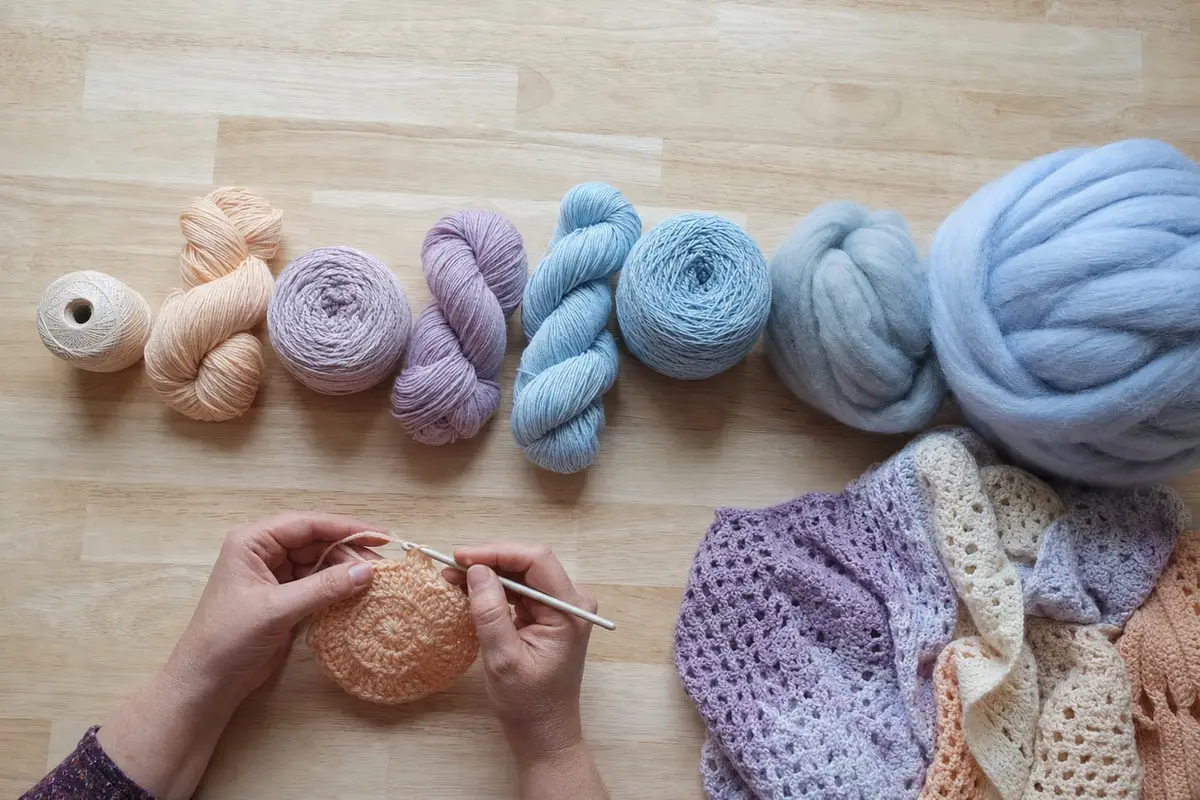
The Craft Yarn Council's Standards & Guidelines (2018) sort yarn into eight categories by thickness, from 0 Lace to 7 Jumbo. Medium (4), which covers worsted, afghan and Aran yarns, is the usual beginner choice: the council recommends a 5.5 to 6.5 mm (I-9 to K-10½) crochet hook, for 11 to 14 single crochet stitches per 4 inches.
Yarn weight — In the Craft Yarn Council's Standard Yarn Weight System (2018), yarn weight is the thickness of a yarn, not the weight of a skein, expressed as a numbered category from 0 Lace to 7 Jumbo.
Some links on this page are affiliate links: if you buy through them, we may earn a commission at no extra cost to you. It never changes our rankings. As an Amazon Associate I earn from qualifying purchases. Affiliate policy
Yarn labels in the United States carry a small skein symbol with a number from 0 to 7. That number comes from the Craft Yarn Council’s Standard Yarn Weight System, and it tells you more than any yarn name: how thick the strand is, which hook to start with and roughly how many stitches you will get per inch. This chart and guide explain each category and how to use it.
The yarn weight chart
All figures come from the Craft Yarn Council’s Standards & Guidelines (2018). Crochet gauges are single crochet stitches per 4 inches; the council labels every range a guideline only.
| Category | Yarn names in this category | Crochet gauge (sc per 4 in) | Crochet hook | Knitting needles |
|---|---|---|---|---|
| 0 Lace | fingering, 10-count crochet thread | 32 to 42 double crochet | steel 1.6 to 1.4 mm; regular B-1 (2.25 mm) | 1.5 to 2.25 mm (US 000 to 1) |
| 1 Super Fine | sock, fingering, baby | 21 to 32 | 2.25 to 3.5 mm (B-1 to E-4) | 2.25 to 3.25 mm (US 1 to 3) |
| 2 Fine | sport, baby | 16 to 20 | 3.5 to 4.5 mm (E-4 to 7) | 3.25 to 3.75 mm (US 3 to 5) |
| 3 Light | DK, light worsted | 12 to 17 | 4.5 to 5.5 mm (7 to I-9) | 3.75 to 4.5 mm (US 5 to 7) |
| 4 Medium | worsted, afghan, Aran | 11 to 14 | 5.5 to 6.5 mm (I-9 to K-10½) | 4.5 to 5.5 mm (US 7 to 9) |
| 5 Bulky | chunky, craft, rug | 8 to 11 | 6.5 to 9 mm (K-10½ to M-13) | 5.5 to 8 mm (US 9 to 11) |
| 6 Super Bulky | super bulky, roving | 7 to 9 | 9 to 15 mm (M-13 to Q) | 8 to 12.75 mm (US 11 to 17) |
| 7 Jumbo | jumbo, roving | 6 and fewer | 15 mm and larger (Q and larger) | 12.75 mm and larger (US 17 and larger) |
Reading across a row tells you what to expect from a yarn: a Medium (4) worsted on a 5.5 mm hook gives about 11 to 14 single crochet per 4 inches. If your stitches come out denser or looser, the hook, not the yarn, is what you change.
What yarn weight really means
Yarn weight is a measure of thickness, not of how heavy a ball is. Two 100-gram skeins can hold very different lengths: a thin yarn might run several hundred yards, a bulky one much less. That is why the category number matters more than the grams printed on a label when you choose yarn for a pattern.
The numbered system exists because traditional names overlap and vary by country. “Worsted” and “Aran” sit in the same Medium (4) category in the Craft Yarn Council’s table, while “DK”, short for double knitting, belongs to Light (3). A pattern that says “worsted weight” is asking for a category 4 yarn, whatever brand you choose.
The categories one by one
0 Lace. The finest category, which includes crochet thread. Lace yarns are often worked on larger hooks than their thickness suggests, to make open, airy fabric, which is why the council notes that their gauge is difficult to pin down. Steel hooks are common here.
1 Super Fine. Sock and fingering yarns, used for socks, shawls and detailed amigurumi. Expect many stitches per inch and slow, fine work.
2 Fine. Sport and baby yarns: lightweight garments, baby blankets and accessories with a soft drape.
3 Light. DK and light worsted, a versatile weight for garments, hats and amigurumi. It is a little thinner than worsted and takes a hook roughly one size smaller.
4 Medium. Worsted, afghan and Aran: the workhorse weight. Blankets, scarves, hats, dishcloths and most beginner projects use it. Lion Brand’s 2026 guide for new crafters calls it the clear starting point for beginners.
5 Bulky. Chunky, craft and rug yarns: fast projects such as thick scarves, cowls and rugs.
6 Super Bulky. Super bulky and roving yarns, for very quick blankets and accessories on large hooks.
7 Jumbo. The thickest category, for oversized blankets and arm-knitting-style projects, with hooks of 15 mm and up.
Which weight should a beginner use?
Medium (4). It is thick enough to see each stitch, thin enough to work with a standard hook, and the most widely available. Choose a smooth yarn in a light, solid color; Lion Brand’s 2026 guide warns that fuzzy, eyelash and boucle yarns hide stitches completely. Our comparison of the best yarn for beginner crochet applies these criteria to specific yarns, including Red Heart Super Saver, a medium-weight acrylic that Yarnspirations says first reached shelves in 1987.
How to read a yarn label
A US yarn label usually shows:
- The weight symbol: a skein drawing with the category number, 0 to 7.
- Fiber content: acrylic, cotton, wool, blends.
- Length and weight: yards and meters, ounces and grams.
- Recommended hook and needle sizes, often in both US and metric.
- Gauge: stitches and rows over 4 inches, sometimes in a small grid symbol.
- Care instructions and the dye lot.
When the label’s hook size and the chart above disagree slightly, follow the label for that yarn; when a pattern gives a gauge, follow the pattern and change hooks until your swatch matches.
Which weight for which project
The weight you choose shapes the fabric as much as the stitch does. As a rule of thumb:
| Project | Usual weights | Why |
|---|---|---|
| First practice pieces, dishcloths | Medium (4) | easy to see, quick to work |
| Blankets and throws | Medium (4) to Super Bulky (6) | warmth and speed; heavier yarns finish faster |
| Hats, scarves, cowls | Medium (4) to Bulky (5) | warm and quick |
| Amigurumi | Light (3) or Medium (4), on a smaller hook | firm fabric that hides the stuffing |
| Baby items, lightweight garments | Fine (2) or Light (3) | soft drape, lighter fabric |
| Shawls, doilies, lace | Lace (0) or Super Fine (1) | fine, open fabric |
Thicker yarn means fewer stitches per inch, so a blanket in bulky yarn takes far fewer stitches than the same size in worsted, but uses more yarn by weight and makes a heavier, less drapey fabric.
Identifying a yarn without a label
If you inherit yarn or lose a label, the Craft Yarn Council’s 2018 guidelines describe a simple check called wraps per inch (WPI). Wrap the yarn snugly around a pencil for a few inches, strands side by side without overlapping or gaps, then count how many wraps fit in one inch, measured in a few places. Compare with the council’s chart:
| Category | Wraps per inch |
|---|---|
| 0 Lace | 30 to 40 or more |
| 1 Super Fine | 14 to 30 |
| 2 Fine | 12 to 18 |
| 3 Light | 11 to 15 |
| 4 Medium | 9 to 12 |
| 5 Bulky | 6 to 9 |
| 6 Super Bulky | 5 to 6 |
| 7 Jumbo | 1 to 4 |
The council warns that WPI is subjective and varies with how tightly you wrap, so always confirm with a gauge swatch before starting a project.
Substituting yarn in a pattern
To replace the yarn a pattern names, pick one in the same category, check that its label gauge is close to the pattern’s, and compare the total length needed, not the number of skeins: divide the yardage the pattern requires by the yards per skein of your yarn. Then crochet a 4-inch swatch with the recommended hook. If you have more stitches than the pattern’s gauge, use a larger hook; if fewer, a smaller one.
Common yarn weight mistakes
- Choosing by name only. “Worsted” from one brand can feel thicker than from another. The category number and the label gauge are more reliable than the name.
- Mixing weights in one piece. A blanket that combines Light (3) and Medium (4) yarns will have rows of different heights unless you change hooks; keep one category per project, or swatch both.
- Ignoring the hook on the label. The label’s hook size is the starting point for the gauge the yarn was designed for; a much larger or smaller hook changes the fabric completely.
- Comparing skeins by grams. Two 100 g skeins in different weights hold different lengths. Compare yards or meters when you replace a yarn.
- Skipping the swatch. Even within one category, gauges vary. For anything that must fit, a 4-inch swatch is the only reliable check.
Weight and fiber together
Weight is only half of a yarn’s identity. The same Medium (4) category includes stiff cotton, springy wool and soft acrylic, which behave very differently: cotton shows every stitch and has no stretch, wool is elastic and warm, acrylic is forgiving and easy to wash. Choose the weight for the size of stitch and fabric you want, then the fiber for how the finished piece will be used and washed.
From yarn weight to hook size
The yarn weight sets the starting point for your hook, but hook sizes have their own naming system. Our crochet hook size chart gives every US letter with its millimeter size and explains how to choose a hook for a given yarn and pattern. If you have not started yet, our beginner’s guide to crochet shows how to make your first stitches in a medium weight yarn.
Key facts
- The Craft Yarn Council's 2018 Standard Yarn Weight System recommends 2.25 to 3.5 mm (B-1 to E-4) crochet hooks for Super Fine (1) yarn, 3.5 to 4.5 mm for Fine (2), 4.5 to 5.5 mm for Light (3), 5.5 to 6.5 mm for Medium (4), 6.5 to 9 mm for Bulky (5) and 9 to 15 mm for Super Bulky (6).Craft Yarn Council, Standards & Guidelines for Crochet and Knitting, 2018
- The same 2018 table gives crochet gauges of 21 to 32 single crochet per 4 inches for Super Fine (1) yarn, 12 to 17 for Light (3), 11 to 14 for Medium (4) and 8 to 11 for Bulky (5), labeled as guidelines only.Craft Yarn Council, Standards & Guidelines for Crochet and Knitting, 2018
- The Craft Yarn Council's 2018 table names the yarns in each category: Light (3) for DK and light worsted, Medium (4) for worsted, afghan and Aran, and Bulky (5) for chunky, craft and rug yarns.Craft Yarn Council, Standards & Guidelines for Crochet and Knitting, 2018
- Lion Brand's 2026 yarn guide for new crafters says weight 4, Medium or Worsted, is the clear starting point for beginners, and that fuzzy, eyelash and boucle yarns hide stitches completely.Lion Brand, Yarn Selection Tips for New Crafters: 2026 Guide, 2026
FAQ
What is the most common yarn weight?
Medium (4), which the Craft Yarn Council's system uses for worsted, afghan and Aran yarns. It is the weight most beginner patterns and kits call for, and the one most widely sold in US craft stores.
Is DK the same as worsted?
No. In the Craft Yarn Council's system, DK is in category 3, Light, together with light worsted, while worsted is in category 4, Medium. DK is slightly thinner and usually takes a hook about one size smaller.
Does yarn weight mean how heavy the skein is?
No. Yarn weight describes the thickness of the strand. A 100 g skein of thin yarn and a 100 g skein of bulky yarn weigh the same but have very different lengths: the thinner yarn has many more yards.
Can I substitute one yarn weight for another?
Only with care. Choose a yarn in the same weight category, compare the gauge on the labels and make a swatch. Using a different weight changes the size of the finished piece and the amount of yarn you need.