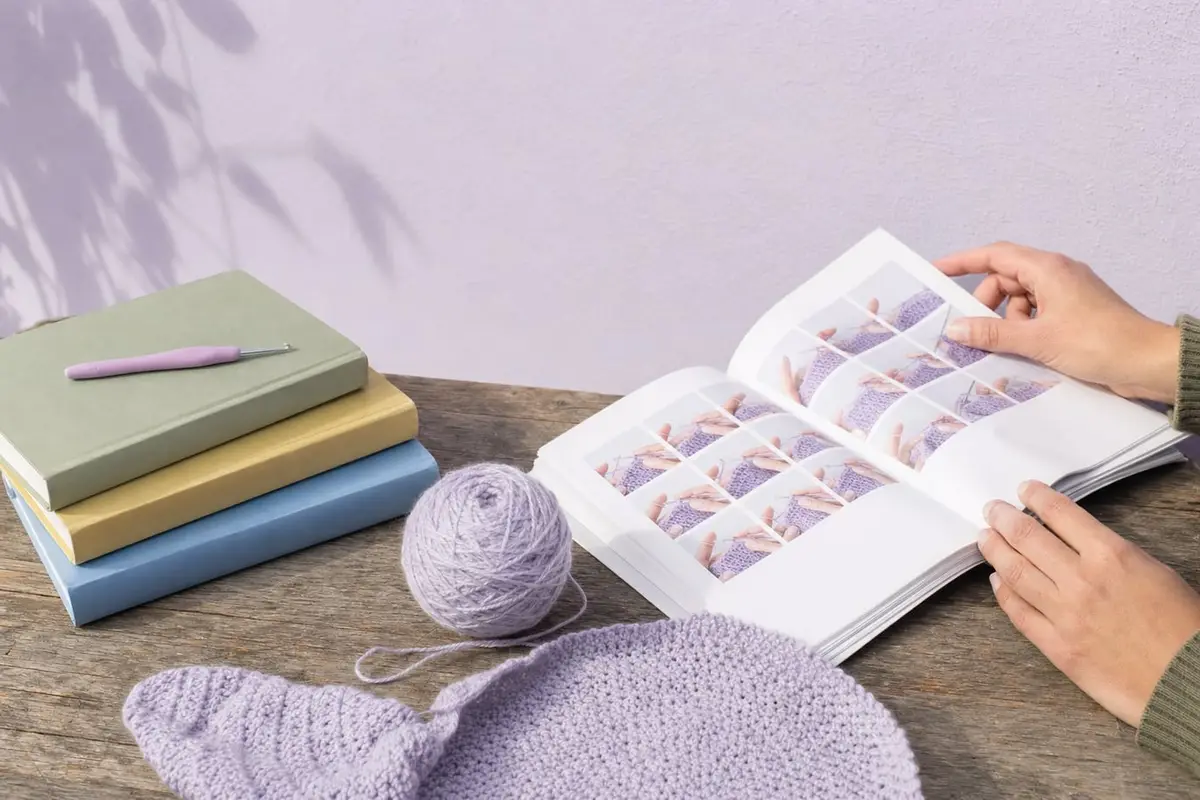
For a first crochet book, Crochet Step by Step by Sally Harding is the most complete course: over 100 techniques photographed step by step, with pattern reading and 20 easy projects. Add Dora Ohrenstein's Crochet Every Way Stitch Dictionary for stitches, or Edie Eckman's Crochet Answer Book for problems and left-handed illustrations.
Some links on this page are affiliate links: if you buy through them, we may earn a commission at no extra cost to you. It never changes our rankings. As an Amazon Associate I earn from qualifying purchases. Affiliate policy
Comparison
| Product | Type | Pages | Format | Published | What it covers |
|---|---|---|---|---|---|
| Crochet Step by Step (Sally Harding, DK) | Step-by-step course with projects | 224 | Paperback | 2021 | Over 100 techniques, 20 easy projects, symbols and pattern reading |
| Crochet Every Way Stitch Dictionary (Dora Ohrenstein) | Stitch dictionary | 288 | Paperback | 2019 | 125 stitches, each with photos, written instructions and a chart |
| The Crochet Answer Book, 2nd Edition (Edie Eckman) | Question-and-answer reference | 408 | Paperback | 2015 | Yarns, stitches, tools, techniques; left-handed illustrations |
| The Complete Photo Guide to Crochet, 2nd Edition (Margaret Hubert) | Complete photo reference | 272 | Paperback | 2014 | 220 stitch patterns, basics, Tunisian, broomstick, hairpin lace, freeform |
| Crochet Cute Critters: 26 Easy Amigurumi Patterns (Sarah Zimmerman) | Amigurumi for beginners | 140 | Paperback | 2019 | 26 amigurumi projects, essential skills, worsted yarn |
Our picks
Crochet Step by Step (Sally Harding, DK)
The most complete way to learn from a book: techniques photographed step by step, pattern reading and symbols, then 20 easy projects to practice on.
Crochet Every Way Stitch Dictionary (Dora Ohrenstein)
125 stitches, each with a photo, written instructions and a chart, and shown with shaping, so it stays useful long after the basics.
The Crochet Answer Book, 2nd Edition (Edie Eckman)
A question-and-answer format that is easy to search when something goes wrong, with illustrations for left-handed crocheters.
The Complete Photo Guide to Crochet, 2nd Edition (Margaret Hubert)
220 stitch patterns and specialty techniques such as Tunisian, broomstick and hairpin lace: a reference to grow into rather than a first lesson.
Crochet Cute Critters: 26 Easy Amigurumi Patterns (Sarah Zimmerman)
26 small animals built on shared head and body patterns, with a standard hook and worsted weight yarn, so each project repeats the same core skills.
A book does what a video cannot: it stays open next to your work, at the right page, while both hands are busy. For a beginner, the best one is not the thickest. It is the book that shows each movement clearly, explains how patterns are written, and gives you a few projects to practice in the right order.
At a glance
| Book | Author | Publisher, year | Pages | Best for | Not ideal for |
|---|---|---|---|---|---|
| Crochet Step by Step | Sally Harding | DK, 2021 | 224 | learning from zero: 100+ techniques, symbols, 20 easy projects | a large stitch library |
| Crochet Every Way Stitch Dictionary | Dora Ohrenstein | Abrams, 2019 | 288 | 125 stitches, each with photos, written instructions and a chart | someone who has not learned sc, hdc and dc yet |
| The Crochet Answer Book, 2nd ed. | Edie Eckman | Storey, 2015 | 408 | fixing problems; left-handed illustrations | learning through projects in order |
| The Complete Photo Guide to Crochet, 2nd ed. | Margaret Hubert | Creative Publishing International, 2014 | 272 | 220 stitch patterns; Tunisian, broomstick and hairpin lace | a short first course |
| Crochet Cute Critters | Sarah Zimmerman | Rockridge Press, 2019 | 140 | 26 beginner amigurumi in worsted (4) yarn, worked in single crochet rounds | flat projects such as scarves and blankets |
Whatever the book, the stitches it teaches are the same five basics: chain, slip stitch, single crochet (UK double crochet), half double crochet (UK half treble) and double crochet (UK treble). Check which names a book uses before following its patterns.
The five books below were chosen to cover five different needs, one book each. We did not use them for this comparison: the descriptions come from their publishers and from library catalogs, and the method is explained under “How we selected”.
What makes a good crochet book for a beginner
Before looking at titles, check four things in any book’s description or preview:
- How the movements are shown. Close-up step-by-step photos or clear diagrams for each stitch, from the slip knot to fastening off. A single photo of a finished swatch is not enough to learn from.
- Pattern reading. A section on abbreviations, symbols and how instructions are written. This is what lets you move on from the book’s own projects to patterns from designers.
- Projects in order. Small projects that each add one skill, rather than a collection of patterns of mixed difficulty.
- Terminology. US and UK crochet terms use the same names for different stitches. Most American editions use US terms, but books first published in Britain may not, so check the description or the first pages. Our page on US vs UK crochet terms explains the difference.
If you are left-handed, also check whether the book includes left-handed instructions or mirrored illustrations; most do not say so.
Crochet Step by Step, by Sally Harding: the course
Who it suits: an absolute beginner who wants one book to learn from.
DK presents this book as a visual course: over 100 key techniques photographed step by step, a section on stitch symbols, abbreviations and pattern reading, and 20 easy projects. That combination covers the three needs above in one volume: learn the movement, learn to read instructions, then practice on something real. At 224 pages, it is shorter than a full reference, which makes it easier to work through in order.
Keep in mind: it is a course rather than a stitch library, so you will want a stitch dictionary later.
Crochet Every Way Stitch Dictionary, by Dora Ohrenstein: the stitch library
Who it suits: a beginner who has learned the basic stitches and wants to explore texture and patterns.
Abrams describes 125 essential stitches, each shown three ways: worked even, with shaping at the edges and with shaping inside the fabric. Each stitch has swatch photos, written instructions and a symbol chart, which makes the book a good way to practice reading both written and charted patterns. The publisher aims it at ambitious beginners as well as experienced crocheters.
Keep in mind: it assumes you already know the basic stitches; pair it with a course or with our guide to basic crochet stitches.
The Crochet Answer Book, by Edie Eckman: the problem solver
Who it suits: anyone who learns from videos and wants a reference for when something goes wrong, and left-handed crocheters.
Instead of chapters to read in order, this 408-page book is organized as questions and answers on yarns, stitches, tools and techniques, which makes it quick to search with a specific problem in mind. Its publisher states that it includes illustrations for left-handed crocheters, which is rare among general crochet books.
Keep in mind: it is a companion rather than a course; it does not lead you through projects.
The Complete Photo Guide to Crochet, by Margaret Hubert: the reference to grow into
Who it suits: a beginner who wants one large reference that will still be useful in a few years.
The second edition gives step-by-step instructions for 220 stitch patterns and covers specialty techniques such as Tunisian crochet, broomstick lace, hairpin lace and freeform crochet, along with the basics. It is the broadest book in this list.
Keep in mind: its breadth is also its limit for a first-time learner, who may find a course more direct. We rank it after the problem solver for that reason.
Crochet Cute Critters, by Sarah Zimmerman: the amigurumi starter
Who it suits: a beginner who wants to start with small stuffed animals rather than flat projects.
The book collects 26 animal projects designed for beginners, with step-by-step explanations of essential skills, a standard hook and worsted weight yarn. Its animals share the same head and body patterns, so each new project repeats the core skills while changing the details: a practical way to build confidence in working in the round. You will need the magic ring, which the essential-skills section prepares you for.
Keep in mind: it teaches amigurumi only; for flat projects such as blankets and scarves, a general course comes first.
Book or video?
Both. Videos show movement and speed better than any photo, and they are free. A book gives structure: an order to learn things in, a consistent terminology, and a page you can keep open on the table while you work. Many beginners watch a short video for a movement they cannot picture, then return to the book for the next step. If you follow free video lessons, the Learn to Crochet topic gathers our written tutorials in the same order as a course.
How to get the most from a crochet book
A book works best when you use it like a course rather than a catalog:
- Go in order. A course book such as Crochet Step by Step is built so that each section uses the skills of the previous one. Skipping ahead to the project you like best usually means meeting three new techniques at once.
- Keep it open next to your work. Lay-flat or flexible bindings help; otherwise a book stand or a heavy object on the page keeps your hands free.
- Make the swatches. Reading about a stitch is not learning it. Work a small square of each new stitch before using it in a project.
- Cross-check the terminology. If a book uses UK terms, keep a conversion table at hand, or choose a book in the system your patterns use.
- Use the reference books for questions. A stitch dictionary or a question-and-answer book is easier to search than a video when you need one answer quickly.
What these books do not tell you
Publishers’ descriptions rarely say everything a beginner needs to know. Most do not state whether the instructions are in US or UK terms, and only one of the five, The Crochet Answer Book, is described by its publisher as including left-handed illustrations. Availability also changes: we kept only books sold new by Amazon.com when we checked, but editions go out of print. Check the description and the preview pages before you buy.
Which one to buy first
- If you are starting from zero: Crochet Step by Step.
- If you already know the basic stitches: Crochet Every Way Stitch Dictionary.
- If you learn from videos and want help with problems, or you are left-handed: The Crochet Answer Book.
- If you want one big reference for years: The Complete Photo Guide to Crochet.
- If you want to start with amigurumi: Crochet Cute Critters.
Then pick a first project that matches your skills: our guide to choosing your first crochet project explains how.
Key facts
- DK describes Crochet Step by Step by Sally Harding as covering over 100 key techniques with step-by-step photography, including stitch symbols, abbreviations and pattern reading, plus 20 easy projects.Penguin Random House, Crochet Step by Step by Sally Harding, 2021
- Crochet Every Way Stitch Dictionary presents 125 stitches, each worked three ways (even, with edge shaping and with internal shaping), with swatch photos, written instructions and a symbol chart.Abrams, Crochet Every Way Stitch Dictionary by Dora Ohrenstein, 2019
- The publisher of The Crochet Answer Book, 2nd edition, states that it includes illustrations for left-handed crocheters.Hachette Book Group, The Crochet Answer Book, 2nd Edition by Edie Eckman, 2015
- The second edition of Margaret Hubert's Complete Photo Guide to Crochet gives step-by-step instructions for 220 stitch patterns and covers Tunisian crochet, broomstick lace, hairpin lace and freeform.Quarto, The Complete Photo Guide to Crochet, 2nd Edition, 2014
How we selected
We started from well-known crochet books aimed at beginners or used as beginner references, then kept only titles whose details we could confirm with the publisher and a library catalog (author, edition, year, page count, format) and that were sold new by Amazon.com on October 25, 2026. We grouped them by type and kept one book per type: a course, a photo reference, a stitch dictionary, a problem solver and an amigurumi book. Within the list, books that teach the basics from zero rank above references that assume them. We did not use these books ourselves for this comparison; the descriptions come from publishers' information and tables of contents.
FAQ
Can you learn to crochet from a book?
Yes. A good beginner book shows each movement in close-up photos or diagrams, from the slip knot to finishing, and its projects let you practice in order. Many people combine a book, which stays open next to the work, with short videos for the movements they find hard to picture.
What should a beginner crochet book include?
Look for step-by-step photos or diagrams of the basic stitches, an explanation of abbreviations and pattern reading, guidance on choosing yarn and hook sizes, and a few easy projects. If you are left-handed, check that the book includes left-handed instructions or illustrations.
Is a stitch dictionary useful for beginners?
Once you know single, half double and double crochet, yes. A stitch dictionary shows how those basic stitches combine into textures and patterns, with written instructions and usually a chart, so it helps you practice reading patterns and choose a stitch for a project.
Are there crochet books for left-handed beginners?
Some general books include left-handed instructions or illustrations, such as The Crochet Answer Book by Edie Eckman, whose publisher states it has illustrations for left-handed crocheters. Dedicated left-handed titles exist but are fewer, and availability changes, so check the description before buying.
Sources
- Penguin Random House: Crochet Step by Step by Sally Harding
- Abrams: Crochet Every Way Stitch Dictionary by Dora Ohrenstein
- Hachette Book Group: The Crochet Answer Book, 2nd Edition by Edie Eckman
- Quarto: The Complete Photo Guide to Crochet, 2nd Edition
- Penguin Australia: Crochet Cute Critters by Sarah Zimmerman
- Open Library: catalog records for the five books